About Me
I’m a versatile developer with a passion for creating efficient, scalable systems, performant software, and stylistic interfaces. I love all aspects of development, from meticulous planning to late night bug fixing.
Currently, I’m enrolled in Algonquin College’s Game Development program, with an expected graduation in spring 2026. Over the last year, I’ve been working with a small team to develop a capstone project in unity.
Previously, I’ve worked as a full stack developer in the commercial software industry. During this time, I created customer facing software packages that handled sensitive information, processed large sets of data, and tailored every detail to meet clients’ specific requests.
In my spare time, I love cooking, trying new indie games, and going for long walks with good music.
Skills And Experience
- Proficient in several programming languages including C#, C++, Python, Java, JavaScript, and Visual Basic.
- Experienced with game engines including Unreal Engine, Unity, Godot, and some experience in game engine development.
- Excellent at troubleshooting, bug fixing, and optimization.
- Highly adaptable, able to learn new technologies and systems quickly.
Projects
Capstone project: Honk! Ranger Rush
Honk! Ranger Rush is a roguelike dungeon-crawler which sets the player out on a cross-country adventure to thwart an evil Goose uprising.
In this project I created multiple complex backend systems, designed and programmed UI elements and menus, optimized existing systems to significantly increase performance, and managed builds and code repositories.
If you'd like to try it out, you can check out the game's site.(I made that too!)
Here's a few highlights I'm proud of:
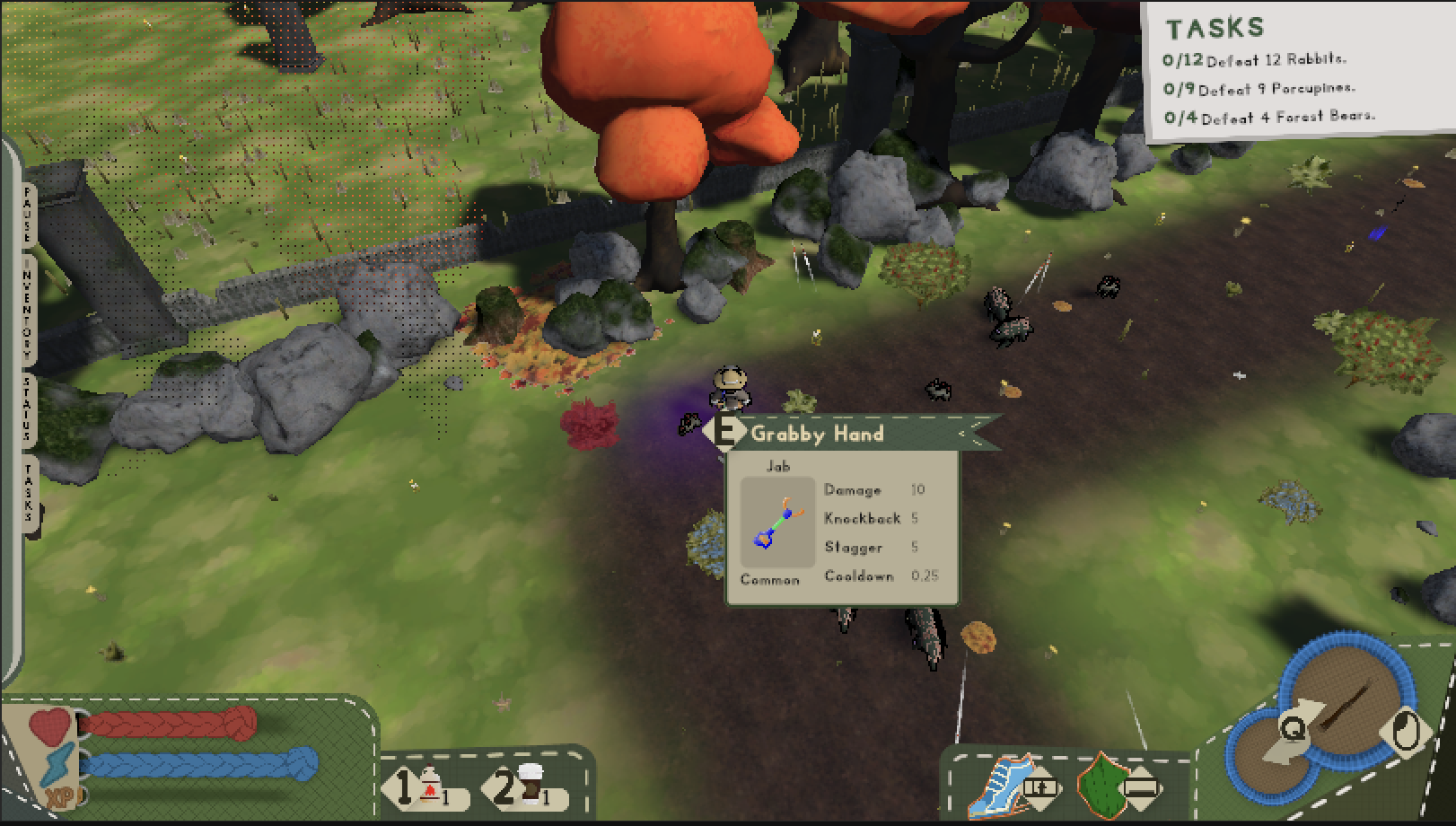
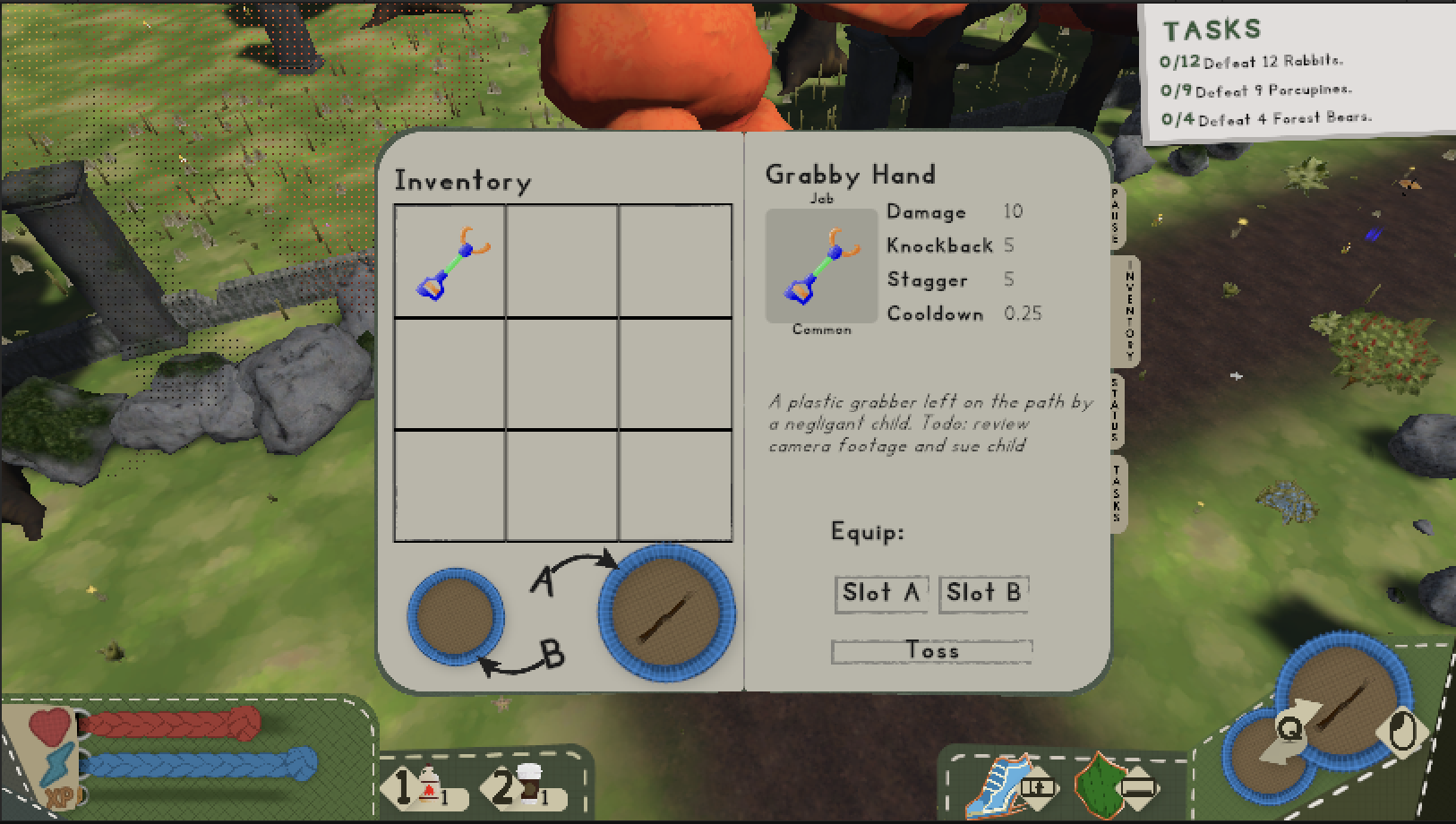
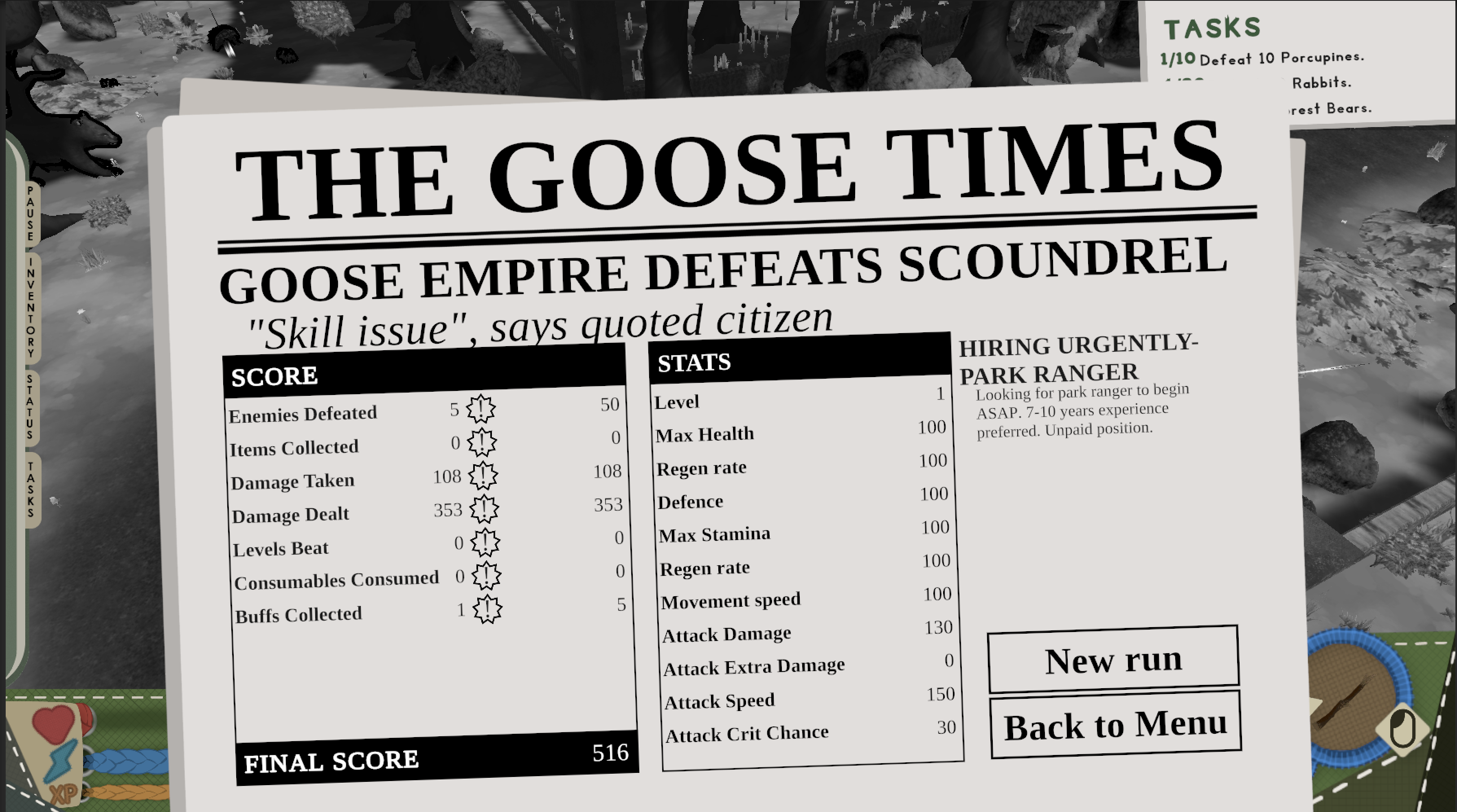
The UI
I was responsible for both the design and implementation of the majority of the game’s UI, like the HUD, inventory booklet, and a variety of screens and menus.
I pride myself in having created a set of interfaces that are easy to read and understand, while also following the game’s themes and stylizations.
The front end of the UI is entirely made using the new unity UI Toolkit. Despite its experimental label, it’s been an excellent tool.
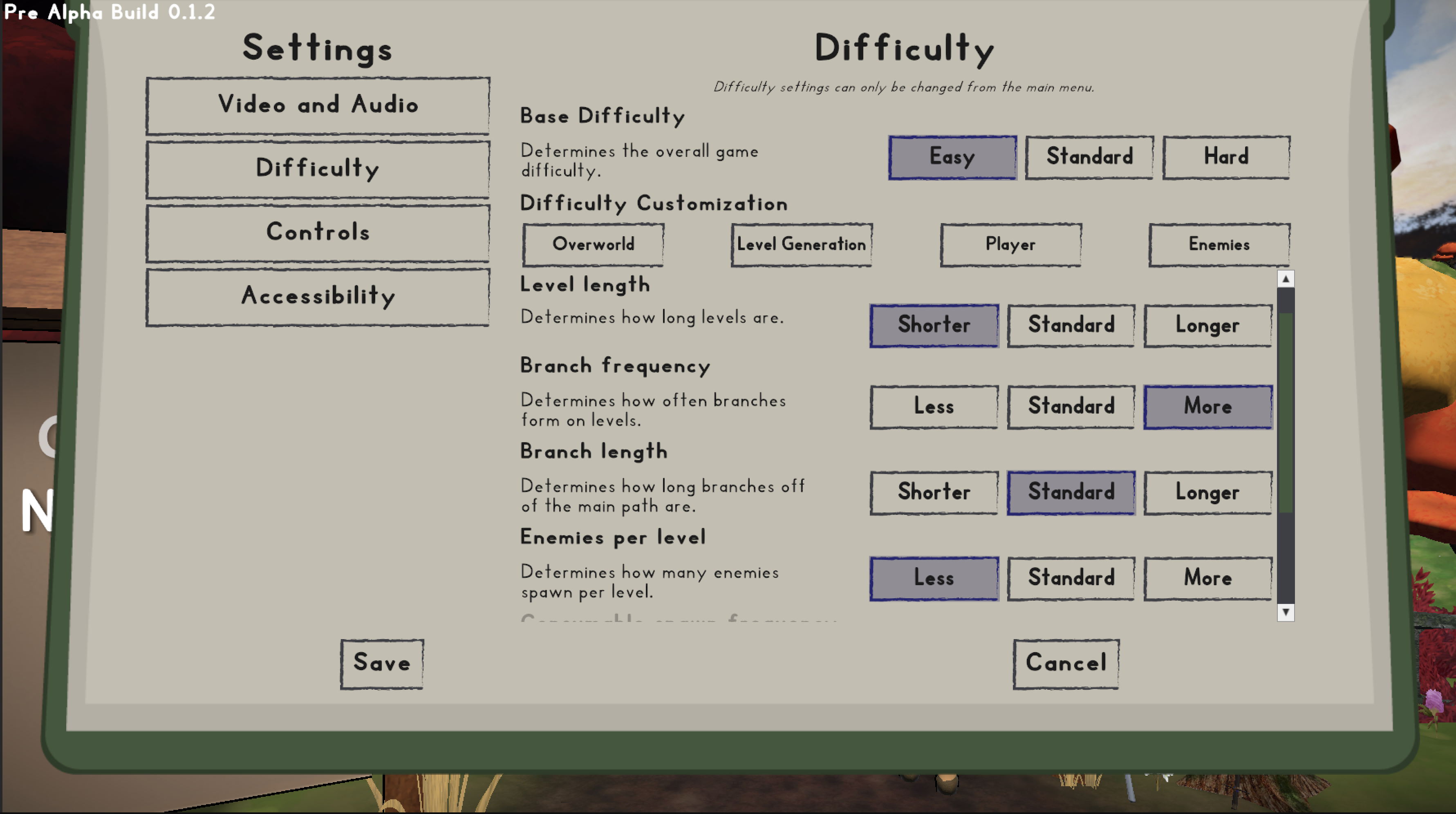
The Difficulty System
This system was the result of player’s seeming to provide conflicting feedback as to what worked and what didn’t with the game. While we can’t please everyone, we wanted to get players as close as possible to their desired experience.
At the start of a run, players can pick a base difficulty, but in the options menu, players can pick and choose how hard or easy they want each specific aspect of the game. While simple for players, the back end uses C# reflection to let designers and developers get and set difficulty settings without having to worry about what difficulty to modify and if it’s been overridden or not.

The Saving System
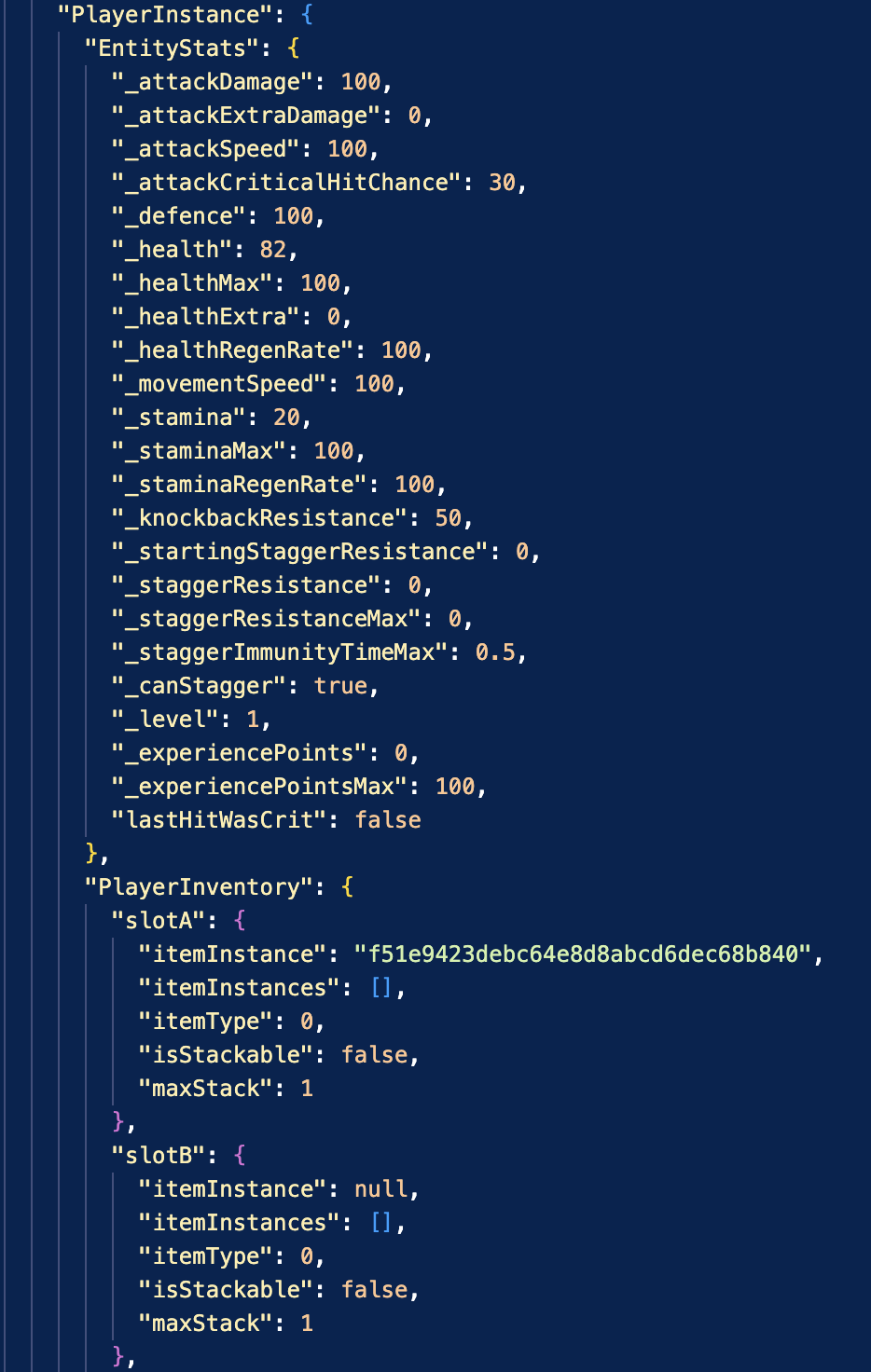
I wrote a backend system that saves and loads game data. When I was planning this system, I knew it needed to be scalable and versatile unless I wanted to spend the rest of the semester maintaining it.
My solution was to create a database system that saves game data to a JSON object. Combined with a simple interface and a few attributes for classes to implement, saving and loading complex game data was as simple as calling one function!
Optimization And Engine Management
A good game is worthless if it can’t run. Which is why I spent hours optimizing and streamlining the game to improve performance and compatibility.
By profiling the game, identifying bottlenecks, and implementing performance saving fixes. I was able to get the game from an unreliable 5-15 fps, all the way up to a stable 60.